
Xennials
The Star Wars Generation and the uneasy path from an analog childhood to a digital adulthood.

I don’t recall the first time I heard the word Xennials, but as someone born in 1978, writer Sarah Stankorb’s term for the micro-generation born between 1977 and 1983 immediately struck me as just right. Xennials include the youngest members of Generation X and the oldest members of the Millennial generation. Interestingly, this period also perfectly encapsulates the release years of the original Star Wars trilogy (more on this later).
Other suggested names for this micro-generation include: The Oregon Trail-Generation (another strong contender) and Generation Catalano, in reference to Jared Leto’s character from My So-Called Life, who left every girl I knew in high school swooning. My wife was born in 1979, and even today, if you mention Jordan Catalano, her eyes settle into a woozy gaze that leaves me uneasy.
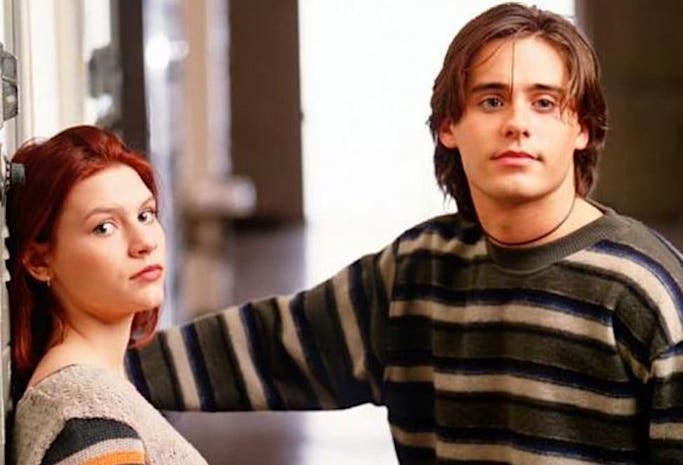
I never thought of myself as a member of Generation X. As far as I was concerned Gen-Xers had finished college, tied flannel shirts around their waists, and headed out to Seattle long before I’d even entered middle school. As for Millennials, I’ve always felt too old and technically inept to count myself among their ranks.
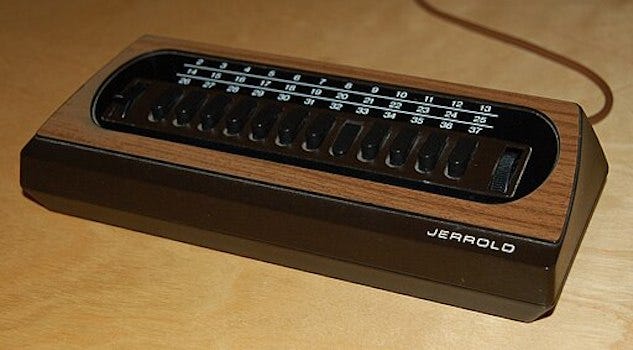
Xennials are described as having had analog childhoods and digital young adulthoods. That is absolutely correct. I’ve long chafed when older people assume I’m unfamiliar with records and tapes, or that I can’t imagine life before TV remotes. Of course I can. Until my family got cable TV, I was the remote control. And when we did get cable, the only reason it no longer fell on me to walk across the living room to change the channel, was because I managed to finagle enough coaxial cable to set one of things on the table beside my father’s sunken seat on the couch:
As a kid, I used to check out read-along books at the library that came with records and cassette tapes sealed up in little coathanger-style ziplock bags. My sisters bought Billy Idol cassettes in music stores that still carried rack after rack of brand new vinyl records. My father drove a car with an eight track player (one that suddenly sprang back to life and scared the shit out of me when I hit a pothole in the mid-90s) . We didn’t have a VCR, but on movie nights we rented massive players that we hauled home in egg-crate-lined suitcases. My mother used a ten-ton IBM typewriter. When my daughter asks when I first used a computer, I tell her about a summer camp where the instructor showed us how to type numbers into the keyboard to make a little triangle (which he called a “turtle”) move around the screen to draw primitive shapes. Even today, I have no idea what that program was, but my daughter finds the story both confounding and hilarious.
I don’t know if family finances or general slow adoption of new technology were to blame (we didn’t have a VCR of our own until the 90s), but I still feel ill at ease in the digital world. I like things I can hold. I still buy physical copies of my movies and music. Though I’ve sold more than 100,000 ebooks, I only read printed books. And I’ve always been a primitive creator. Though I took every art class my high school offered, when I started college in 1997 I was dumbfounded by the Adobe programs my classmates were already so familiar with using. I had never seen or heard of any of them. Even after four years of film school, I never quite got a handle on computer assisted editing programs like AVID. Even today, my brow furrows when I think of saving my writing and photos in the cloud.
My existence in the digital world is an uneasy one. Which makes me think of the original Star Wars trilogy. Those films depict a world of advanced technology and space travel, but one in which everything seems both futuristic and… old. In many ways, the production of the films themselves followed the technological path of the generation that grew up with them, it could even be argued that George Lucas’ films pushed technology forward to such a degree that they helped to bring about the digital reality we live in today.
Star Wars, The Empire Strikes Back, and Return of the Jedi were all shot on photochemical film, a very analog technology, but beginning with the original movie, the breakthrough special effects were made possible by the use of computer aided motion control cameras, which allowed different layers of effects shots to be filmed using software that perfectly replicated the camera movements for each element; this enabled Lucas and his team to create the dynamic space-age dog fights that made the films so memorable and groundbreaking. A perfect marriage of the analog and the digital.
I wasn’t alive when the original film came out, and I was definitely too young to see The Empire Strikes Back on its initial release, but I distinctly remember walking across a sunbaked parking lot in New Mexico in 1983 on the day Return of the Jedi hit theaters, and I grew up watching and rewatching the films in the years to come. For members of the Xennial generation, these are core memories.
By 1997, the year I graduated from high school, George Lucas was preparing to shoot a new, completely digital Star Wars prequel trilogy, and in order to bring newcomers up to speed while taking his new digital tools for a test drive, he went back to the original trilogy and began tinkering. The Special Edition films promised to return the series to the big screen with enhanced visual effects, digital sound, and “a few new surprises.” That last part was an understatement. Those so-called surprises would initiate a series of arguments and philosophical debates that continues to this day, and while disputes over whether or not “Han shot first” can be dismissed as merely the concerns of film geeks and sci-fi nerds, I believe they represent a key turning point for a generation that came of age during a period of technological upheaval.
I distinctly remember sitting in a packed theater the first time I saw the retooled scene in which Harrison Ford didn’t shoot first. You could hear the theater collectively blink, then look around for a moment as everyone tried to figure out had just happened. Like me, they had all seen the original version of the film for the past twenty years, and while they didn’t know what had changed, it was clear that something had been altered, and they didn’t like it. To make matters worse, Lucas made it clear that this was now the only way the films would ever be seen from thereon out. Minor as it may have been, pop culture experiences often play major roles in our core memories, and to have something digitally excised in this manner was jarring. Over time, attempts would even be made to convince fans that Han had never shot first, eventually making analog copies of the films the VHS equivalent of the Zapruder Film. Even today, you can find countless bootleg copies of the originally trilogy available online. Dubbed the Despecialized Editions, these presentations have been painstakingly created by fans who tracked down unaltered versions of the original trilogy in order to recreate the Star Wars films of their youth. I’m not arguing that every member of the Xennial generation shares this particular concern, if I tried to discuss these unaltered films with my wife, her eyes would likely glaze over with boredom (or thoughts of Jordan Catalano) by the time I mentioned Greedo, but I’m certain for many others, perhaps for reasons they can’t even articulate, it hits a nerve.
I have a lot of physical media, far more than most people I know, so I can’t argue that everyone my age is like me, but I do think it’s a sign of the unique period in which I grew up. I don’t like paying for access to a haphazard digital collection of films that may or may not have been altered over the years. I feel better when I have physical access to something I’ve read, or watched, or written. I feel helpless if I’m unable to fix a piece of essential technology myself (like Chewbacca and Han, I prefer things I can hammer into submission with a wrench). It’s a deeply ingrained part of my personality to seek out and protect analog media and old school technology. Perhaps I’m stubborn. Perhaps I’m a luddite. Or maybe I’m just a Xennial.
If you're enjoying Shelf Talkers by Mike Attebery, you might enjoy Mike's books, which you can find at the online retailer of your choice by following this link